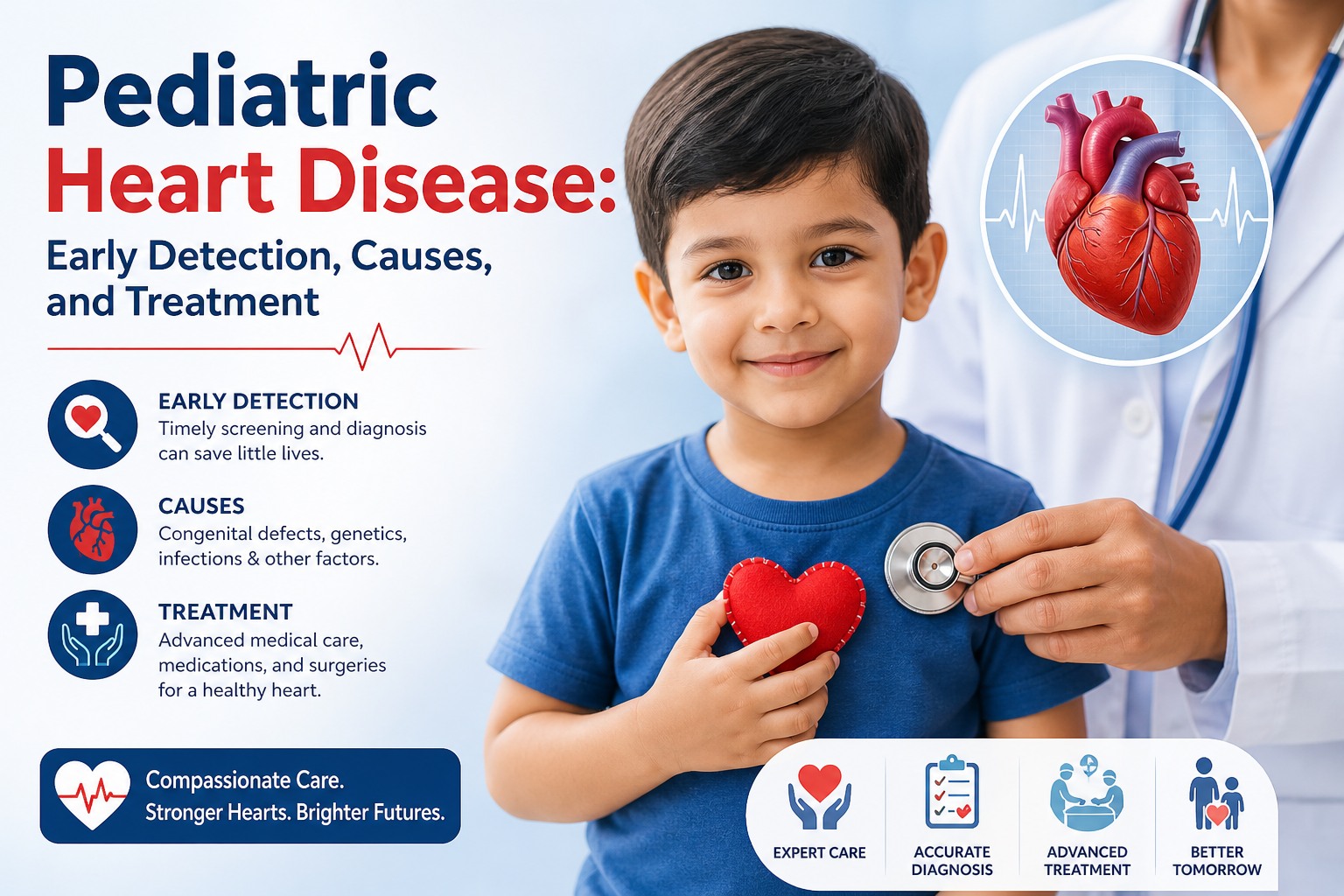
Pediatric heart disease refers to heart conditions that affect infants, children, and adolescents. These conditions may be present at birth (congenital) or develop later in childhood. Early detection and timely treatment play a crucial role in ensuring better health outcomes for children.
What is Pediatric Heart Disease?
Pediatric heart disease includes a wide range of heart problems in children. It is broadly classified into two types:
- Congenital Heart Disease (CHD) – Heart defects present at birth due to improper development of the heart.
- Acquired Heart Disease – Conditions that develop after birth due to infections or other medical issues.
Common Types of Pediatric Heart Conditions
- Atrial Septal Defect (ASD)
- Ventricular Septal Defect (VSD)
- Patent Ductus Arteriosus (PDA)
- Tetralogy of Fallot
- Rheumatic Heart Disease
Causes and Risk Factors
- Genetic factors or family history
- Infections during pregnancy (such as rubella)
- Poor maternal nutrition
- Premature birth
- Exposure to harmful substances during pregnancy
Symptoms to Watch
Symptoms may vary depending on the severity of the condition. Common signs of heart disease in children include:
- Rapid or difficult breathing
- Poor feeding in infants
- Bluish lips or nails (cyanosis)
- Fatigue or low energy
- Slow growth or weight gain
- Frequent chest infections
Diagnosis
Early diagnosis is essential for effective treatment. Doctors may recommend the following tests:
- Echocardiography (2D Echo)
- Electrocardiogram (ECG)
- Chest X-ray
- Pulse oximetry
Treatment Options
Treatment depends on the type and severity of the condition:
- Medications to manage symptoms
- Minimally invasive procedures
- Surgery for complex heart defects
- Regular monitoring in mild cases
Importance of Early Detection
Early detection of pediatric heart disease helps in timely intervention and prevents complications. Regular health check-ups and newborn screening are important for identifying heart problems at an early stage.
When to Consult a Doctor?
You should consult a doctor if your child experiences:
- Persistent breathing difficulty
- Bluish discoloration of lips or skin
- Poor growth or feeding issues
- Unusual tiredness or low activity
Pediatric heart disease can be effectively managed with early diagnosis and proper care. With advancements in medical treatment, most children can lead healthy and active lives.